










Picture this: It’s 2 a.m., and you’re lying awake thinking about a problem that already has a solution; it just hasn’t been built yet.
We live in an era where people are launching rockets for fun and running AI models on pocket-sized phones. And yet, some of the most urgent, obvious inventions in human history… don’t exist. Not even close.
This isn’t a list of flying cars or jetpacks. Those are cool. But what’s on this list could genuinely reshape medicine, the climate, mental health, education, and the basic experience of being alive on Earth in 2025 and beyond.
Here are 15 pieces of uninvented technologies, future products that don’t exist yet, and world-changing sci-fi concepts that we need badly.
Table of Contents
Why Are These Technologies Still Uninvented?
Good question. And honestly, the answer is less dramatic than you’d expect. It’s rarely a ‘we don’t know how’ problem.
More often, it comes down to funding gaps, regulatory walls, missing infrastructure, or, most frustratingly, the fact that there’s no short-term profit motive for anyone to build it.
Think about it like this: penicillin existed in mold for millions of years. Alexander Fleming just happened to notice it in 1928.
We’re in a similar spot with a lot of these technologies. The concepts are there. The science is mostly there. What’s missing is the will, the money, or the right moment.
Let’s get into it.
1. A Universal Cancer Vaccine
What it is
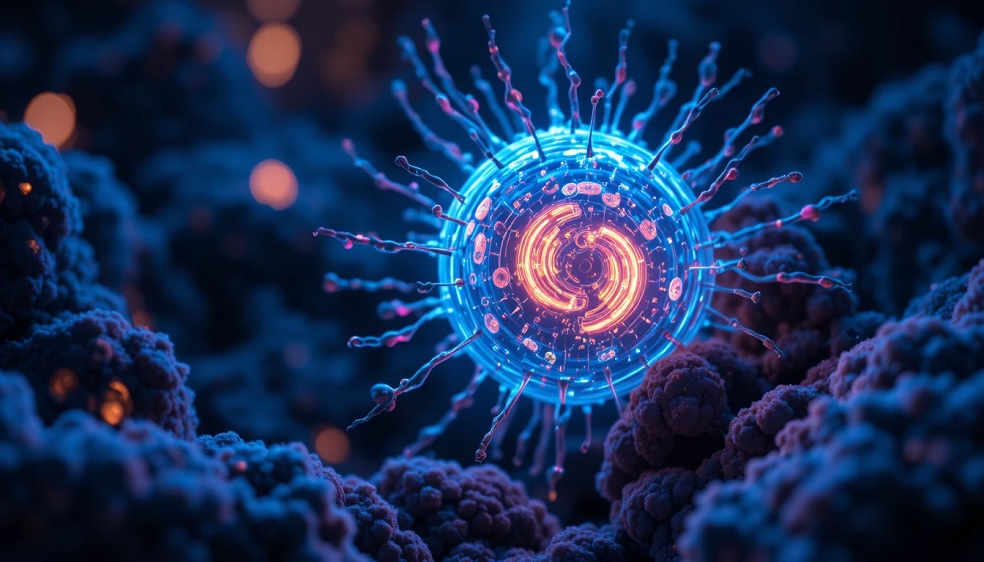
Not a treatment. An actual vaccine, something you take once or annually, that trains your immune system to hunt and destroy cancer cells before they form tumors.
Why do we need it
Cancer kills roughly 10 million people globally every year. That’s 27,000 people per day. The tragedy isn’t just the deaths; it’s the decades of chemotherapy, radiation, and financial ruin that often precede them.
Where research stands
mRNA technology (the same backbone as COVID-19 vaccines) has opened a serious door here.
Moderna and BioNTech are both running trials for personalized mRNA cancer vaccines. We’re not at ‘take a shot and forget about it’ yet, but we’re closer than most people realize.
2. Real-Time Universal Language Translation
What it is
An earpiece or, better yet, a neural implant that translates any spoken language into your native tongue in real time. Not with a 1.5-second lag and a robotic voice. Seamlessly. Like you’re hearing the person speak your language.
Why do we need it
There are roughly 7,100 languages spoken on Earth. Language barriers don’t just create awkward tourist moments; they block access to education, healthcare, legal systems, and economic opportunity for billions of people.
Where research stands
Google’s Pixel Buds took a stab at this. Meta’s Universal Speech Translator is working on it. But the gap between ‘passable for a tourist’ and ‘precise enough for a UN negotiation’ is enormous. We need it. We don’t quite have it.
3. Affordable, Scalable Carbon Capture

What it is
Machines that pull CO2 out of the atmosphere and either store it underground or convert it into useful materials at a price that doesn’t require a billionaire to fund every unit.
Why do we need it
We’ve already blown past the easy targets for emissions reduction. At this point, cutting new emissions isn’t enough. We need to actively remove what’s already up there. The planet doesn’t grade on a curve.
Where research stands
Climeworks in Iceland is doing it. So is Carbon Engineering. But right now, direct air capture costs between $300-$1,000 per tonne of CO2. To matter at scale, it needs to get under $100. That gap is the technology we need.
4. A Non-Addictive Painkiller
What it is
A drug that kills pain as effectively as opioids without the addiction, tolerance buildup, or overdose risk.
Why do we need it
The opioid crisis has killed over 500,000 Americans since 1999. And it’s not just the US; opioid dependency is a global problem, and it often starts with a legitimate prescription after surgery or injury. People aren’t choosing addiction. They’re being handed it.
Where research stands
There’s active research into non-opioid pain pathways, including sodium channel blockers and CGRP inhibitors.
Some breakthroughs exist for specific pain types. But a broad-spectrum, truly non-addictive replacement for morphine? Not yet.
5. Brain-Computer Interface for Paralysis
What it is
A surgically implanted (or ideally non-invasive) device that lets people with paralysis control computers, prosthetic limbs, and communication tools directly with their thoughts.
Why do we need it
There are an estimated 5.4 million people in the US alone living with paralysis. Many can’t speak, type, or signal distress. This technology wouldn’t just improve lives; it would give people their voices back.
Where research stands
Neuralink has implanted its device in a small number of human patients. BrainGate has shown incredible results in trials.
But the technology is still invasive, expensive, and years away from being accessible outside of research settings.
6. Cultured Meat at Grocery Store Prices
What it is
Real meat grown from animal cells in a lab, without slaughtering animals, costs the same as what you’d grab at a supermarket today.
Why do we need it
Animal agriculture is responsible for approximately 14.5% of global greenhouse gas emissions, according to the FAO.
It also causes mass deforestation, uses enormous amounts of freshwater, and raises serious animal welfare questions. Lab-grown meat solves all of that.
Where research stands
The first lab-grown burger cost $330,000 to make in 2013. By 2023, the cost was down to a few dollars per pound in controlled settings. But scaling for mass retail? That infrastructure doesn’t fully exist yet.
7. Targeted Memory Therapy
What it is
A therapy, pharmaceutical, or neurological intervention that can selectively reduce the emotional intensity of traumatic memories without erasing the memories themselves.
Why do we need it
PTSD affects roughly 20 million people globally. For many, existing treatments like EMDR and exposure therapy take years and don’t fully work.
The ability to ‘turn down the volume’ on a traumatic memory, not erase it, just defuse it, would be quietly revolutionary for mental health.
Where research stands
Research involving propranolol and MDMA-assisted therapy has shown that memories are ‘reconsolidated’ when recalled, making them temporarily malleable. This is the scientific window this technology needs. We’re scratching the surface.
8. Room-Temperature Superconductors
What it is
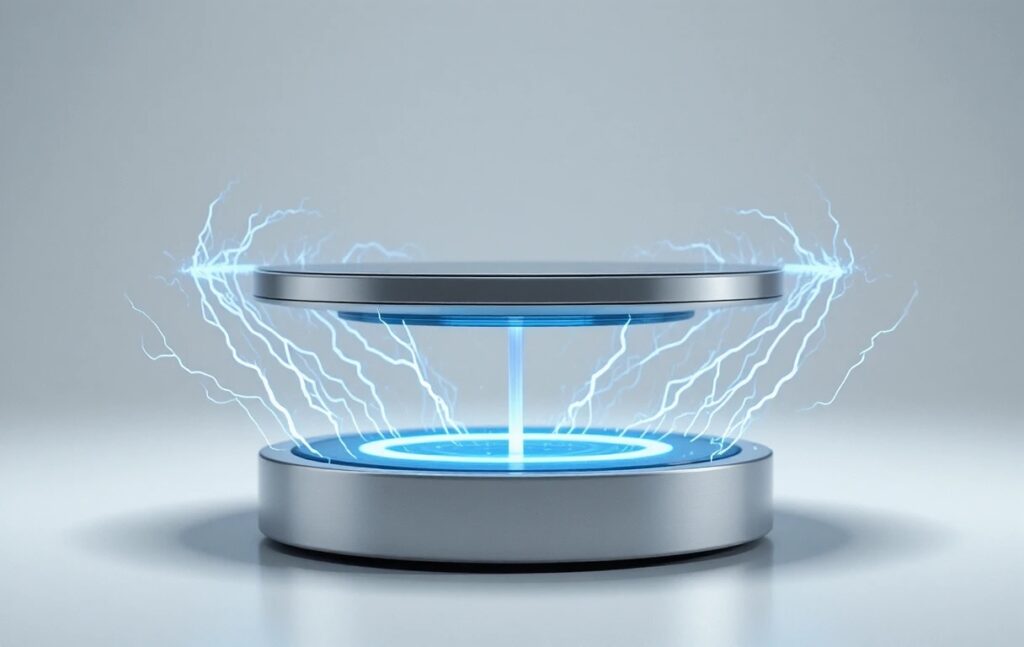
A material that conducts electricity with zero resistance, not at -270°C, but at normal room temperature. This would make energy transmission nearly lossless.
Why do we need it
Right now, a significant percentage of electricity generated is lost as heat during transmission.
Fix that, and renewable energy suddenly becomes dramatically more viable. Superconductors would also make MRI machines cheaper, maglev trains faster, and quantum computing more accessible.
Where research stands
In 2023, South Korean researchers briefly claimed a room-temperature superconductor called LK-99.
The claim didn’t hold up under peer review. But the fact that it caused global scientific excitement overnight shows how much this technology is needed.
9. A Cure for Alzheimer’s Disease
What it is
Not a drug that slows decline. An actual cure something that stops, reverses, or prevents the neurodegeneration that causes Alzheimer’s and related dementias.
Why do we need it
Over 55 million people worldwide live with dementia. By 2050, that number is projected to reach 153 million.
Beyond the human cost, the loss of a person’s memories, identity, and independence, the financial burden on families and healthcare systems is enormous.
Where research stands
Lecanemab and donanemab (both FDA-approved as of 2023–2024) can slow early Alzheimer’s progression by targeting amyloid plaques.
But ‘slowing’ is a long way from ‘curing.’ The research is promising but decades behind where it needs to be, given the scale of the problem.
10. Lossless Wireless Energy Transfer
What it is
The ability to transmit electricity wirelessly over meaningful distances, room-scale, building-scale, eventually city-scale, without significant energy loss.
Why do we need it
Every cord and charger is a temporary workaround. Wireless power at scale would allow electric vehicles to charge while driving (embedded road charging), eliminate the need for power infrastructure in remote areas, and make renewable energy far more distributable.
Where research stands
Wireless charging exists for phones and some EVs. But the efficiency drops dramatically with distance.
Resonant inductive coupling (Nikola Tesla’s 100-year-old idea) is getting a modern revival in research labs. Full-scale deployment is still far off.
11. Anti-Aging Medicine That Actually Works
What it is
Not moisturizer. Not supplements. A medical intervention, such as gene therapy, senolytics, or otherwise, that meaningfully slows or partially reverses biological aging in humans.
Why do we need it
Most of the diseases we spend the most money trying to cure, cancer, heart disease, Alzheimer’s, and type 2 diabetes, are fundamentally diseases of aging. Slow aging, and you reduce the incidence of all of them simultaneously.
Where research stands
Researchers like David Sinclair at Harvard are actively working on NAD+ precursors and epigenetic reprogramming.
Biotech companies like Altos Labs are backed by billions. We’re in the early innings of what could be a genuine scientific breakthrough, but it’s not here yet.
12. Personalized AI Tutors for Every Child
What it is
An AI system capable of teaching any subject to any student, adapting in real time to that student’s learning pace, style, and gaps for free, in any language, anywhere in the world.
Why do we need it
300 million children globally don’t have access to quality education. Even in wealthy countries, one teacher per 30 students is a structural ceiling on how personalized learning can get.
An AI tutor with infinite patience and perfect adaptability would be a democratizing force unlike anything since the public library.
Where research stands
Khan Academy’s Khanmigo is showing genuine promise. Duolingo uses AI for language learning.
But a full-stack, deeply personalized tutor that works across mathematics, science, history, and critical thinking across languages and literacy levels doesn’t exist yet.
13. Plastic-Eating Enzymes at Industrial Scale
What it is
Biological enzymes (or engineered microbes) that can break down plastic pollution quickly and at scale in oceans, landfills, and waterways.
Why do we need it
There are an estimated 150 million tonnes of plastic in the world’s oceans. By 2050, plastics in the sea could outweigh fish by mass.
Mechanical cleanup helps at the margins. What’s needed is a biological solution that can degrade plastic the way fungi decompose wood.
Where research stands
In 2016, Japanese scientists discovered Ideonella sakaiensis, a bacterium that eats PET plastic.
Since then, engineered versions of the enzyme PETase have been created that work 6x faster. Industrial deployment is still years away.
14. True Closed-Loop Water Recycling
What it is
A decentralized system, household or community-scale, that recycles 100% of water used back into drinkable water, using minimal energy.
Why do we need it
2 billion people currently lack access to safe drinking water. Climate change is accelerating freshwater scarcity.
Desalination plants exist, but they’re energy-intensive and coastal. A closed-loop system that works in any geography would be transformative.
Where research stands
NASA has developed water recycling systems for the ISS that reclaim around 90% of the water from urine and sweat.
Getting that efficiency up to 99%+ and making it affordable at the household scale? That’s the engineering leap that needs to happen.
15. A Malaria Vaccine That Fully Works
What it is
A single, widely distributable vaccine that prevents malaria infections with 90%+ efficacy, including in children under 5, who bear the highest mortality burden.
Why do we need it
Malaria kills approximately 600,000 people per year, mostly children, in sub-Saharan Africa. It’s one of the oldest and most deadly infectious diseases in human history.
For context, COVID-19 vaccines were developed and deployed within a year. We’ve been trying to build a malaria vaccine for over 60 years.
Where research stands
The RTS, S/AS01 vaccine (Mosquirix) is approved and rolling out. But it has about 36% efficacy, better than nothing, far from enough. The R21/Matrix-M vaccine shows uninvented technology, future products that don’t exist yet, world-changing sci-fi concepts, and a 75%+ efficacy in early trials. A true 90%+ solution remains the goal.
Final Thoughts
Here’s the thing about uninvented technology: the gap between ‘this doesn’t exist’ and ‘this changes everything’ is often smaller than we think. mRNA was an obscure academic concept for decades.
Then COVID-19 arrived, and within a year, it became one of the most impactful medical technologies in history.
The 15 technologies on this list aren’t pipe dreams. They’re solvable problems. What they need is attention, investment, and the collective decision that they matter enough to build.
Some of them might be built by a startup that doesn’t exist yet. Some might come from a university lab in a country you’ve never visited. Some might even be built by someone reading this.
Want more content like this? Explore our Technology section at bhtnews.com for the latest on emerging science, AI breakthroughs, and the future products reshaping the world.
Frequently Asked Questions
What Counts as ‘Uninvented Technology’ isn’t Everything, Just a Prototype Somewhere?
Great point. In this context, uninvented means ‘not yet available at scale in any practical, affordable form.’ A cure for Alzheimer’s might have a drug in a phase III trial, but if it’s not accessible to the 55 million people who need it today, it’s functionally uninvented. The distinction isn’t about patents or lab prototypes. It’s about whether the technology is actually doing the job it needs to do in the real world.
Which of These Future Products is Closest to Becoming Real?
Cultured meat, personalized AI tutors, and mRNA cancer vaccines are probably the closest. Cultured meat already exists commercially in Singapore. AI tutors are evolving fast. mRNA cancer vaccine trials are showing real results. The ones furthest off are probably room-temperature superconductors and full Alzheimer’s cures; those require fundamental scientific breakthroughs, not just engineering and scaling.
Why hasn’t the Market Already Built These Things?
The market builds what’s profitable in the short term. A malaria vaccine helps poor children in Africa; there’s no billion-dollar market there. Room-temperature superconductors would disrupt enormous existing industries that don’t want disruption. Memory therapy could reduce demand for lifelong psychiatric medication. A lot of what’s on this list doesn’t have a strong profit motive for private companies, which is exactly why government funding, academic research, and global philanthropy matter so much.
Are These Just Sci-fi Concepts, or is There Real Science Behind Them?
All 15 of these are grounded in real, active scientific research, not pure fiction. They’re not the same as warp drives or time travel. Every item on this list has peer-reviewed papers, funded research teams, and, in most cases, working prototypes at a small scale. The gap between ‘exists in a lab’ and ‘exists in the world’ is the exact space these technologies occupy right now.