












If you blinked this month at the latest AI breakthroughs, you probably missed a model launch. That’s not an exaggeration; August 2026 alone brought more than a dozen major AI releases in about three weeks, which tells you something about the pace we’re dealing with.
The short version of what’s new: AI has moved from models that just answer questions to models that reason through problems and act on multi-step plans with far less hand-holding.
I’ll be honest, keeping up with this beat sometimes feels like drinking from a fire hose. But three shifts matter more than the rest of the noise: better multimodal understanding, the rise of genuinely autonomous AI agents, and real progress on the hallucination problem that’s dogged this technology since day one.
Let’s get into it.
Table of Contents
Latest AI Breakthroughs
Multimodal AI: One Model, Every Format
Multimodal AI used to mean a model that could handle text and maybe describe an image. That bar has moved dramatically.
Today’s leading systems process video, audio, and code together, in the same conversation, without you needing separate tools for each.
Picture handing a model a screen recording of a bug in your app, along with the error log and a voice memo explaining what you were trying to do, and getting back a fix that coherently references all three inputs.
This isn’t some thought experiment anymore. Adobe Research and Johns Hopkins just showed off a model that can take a single photo or video clip and turn it into a real, explorable 3D environment.
It’s a big sign of where things are headed: AI isn’t just describing the world now; it’s starting to rebuild it from scratch.
For content creators, this shift is already obvious. There are tools now that watch your unedited video and spit out a transcript, a quick summary, markers for chapters, and even short social media clips all at once. You don’t need to bounce your file between a bunch of different apps anymore.
AI Agents: From Chatbot to Coworker
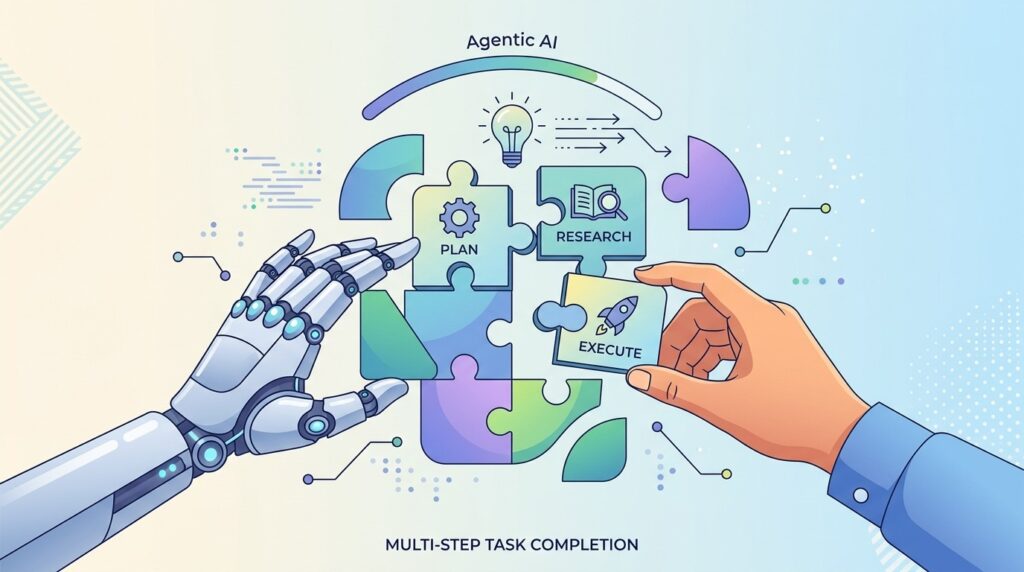
This is the AI breakthrough I think gets undersold. Early chatbots answered one question at a time. Agentic AI plans a sequence of steps, uses tools along the way, and adjusts when something doesn’t go as expected, closer to delegating a task to a junior employee than typing a search query.
We’re seeing this land in real products now, not just research papers. “Always-on” agents can keep working on a task even after you’ve closed your laptop, checking back in once a multi-step job like researching competitors, drafting a report, and formatting it is actually done.
Coding agents have gotten good enough to handle long-running projects across a whole codebase, not just autocomplete a single function.
And it’s not just the big US labs. Competing frontier models with massive parameter counts have been released with open weights, meaning smaller companies can run serious agentic AI on their own infrastructure instead of renting access from a handful of giants. That’s a meaningful shift in who gets to build with this stuff.
Finally, Tackling the Hallucination Problem

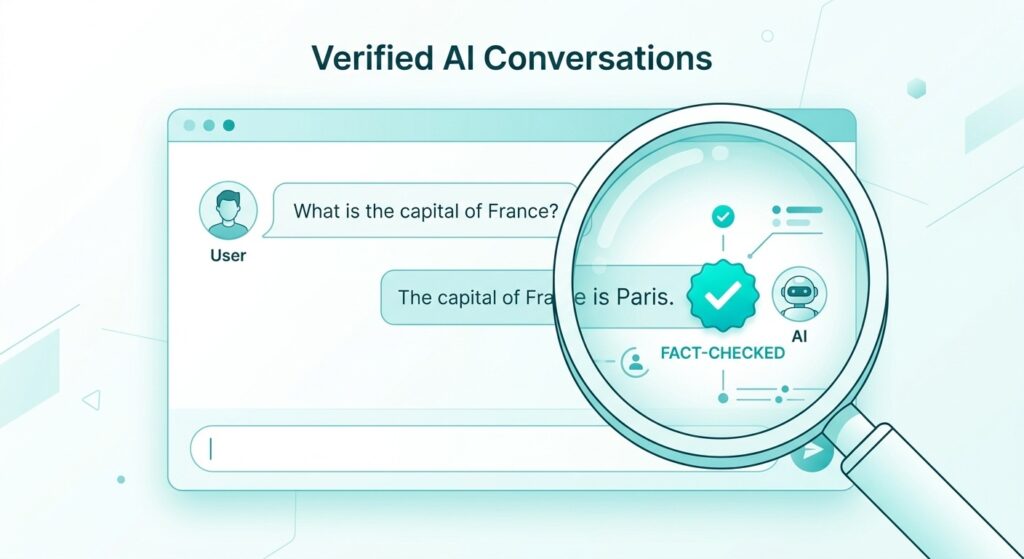
For years, the honest pitch on generative AI came with an asterisk: it’s incredibly capable, but it will sometimes make things up with total confidence. That hasn’t disappeared, but it’s genuinely improving, and the “how” is worth understanding.
Newer architectures build in a kind of forced deliberation instead of generating an answer in one fast pass; the model works through intermediate reasoning steps before committing to a final response, closer to a person double-checking their work than blurting out the first thing that comes to mind.
Paired with better retrieval systems that pull from verified sources in real time, and tighter tool integration that lets a model actually run a calculation instead of guessing at the answer, hallucination rates on complex tasks have dropped meaningfully compared to the models from even a year ago.
It’s not solved. But remember, if you’re dealing with anything high-stakes like legal, medical, or financial stuff, treat what AI gives you the same way you’d treat a smart intern’s first draft.
Double-check, poke holes, and stay skeptical. Still, the progress is impossible to ignore. That’s why people are starting to trust AI with jobs that used to be completely off-limits.
Why This Matters If You’re Just Trying to Get Work Done
You don’t need to track every model release to benefit from this wave. If you want to see agentic AI up close without a huge budget, there are genuinely capable free options now.
An AI app builder free to start with, like Replit’s Agent tools, lets you describe an app in plain English and watch it get built, tested, and deployed with minimal setup.
Low-stakes experiments are the best way to dip your toes in. Give these new “agentic” AIs a try with something that won’t cause chaos if it goes sideways. That’s how you actually see what they can do without risking too much.
The practical takeaway for most people:
- Stop treating multimodal as a gimmick. Feeding a model video or audio alongside text often gets you a better answer than text alone.
- Try delegating a real multi-step task, not just a single question, to see what agentic tools can actually handle.
- Still verify anything high-stakes. Lower hallucination rates aren’t zero hallucination rates.
- Watch open-weight releases. They’re lowering the cost of building serious AI products dramatically.
Conclusion
Let’s be honest: AI used to land big, flashy breakthroughs every few months. Now, it feels like something new pops up every week.
Forget the noise about bigger and fancier models; the real game-changer is how these systems are becoming useful in real, day-to-day work. They’re not just getting smarter; they’re making work smoother.
Curious what this new wave of AI is actually good for? Don’t spend hours reading about it. Pick one annoying, repetitive task you do every week, hand it off to an agentic AI tool, and see what happens. You’ll learn more in that hour than from any news article.
Frequently Asked Questions
What makes a model ‘multimodal’ in 2026?
A multimodal model processes and reasons across multiple input types text, images, video, audio, and code within a single conversation rather than needing separate specialized tools. The most advanced 2026 systems can connect information across all of these formats at once, not just describe one at a time. This lets them tackle tasks that used to require stitching together several apps.
Quick explainer: What’s an AI agent?
An AI agent is a system that plans out a multi-step task, uses software or online tools all by itself, and changes its approach if things aren’t working, unlike an old-school chatbot that just spits out an answer to your question. Imagine handing someone your car keys instead of just asking for directions. That’s the jump. This idea that AI is actually “doing” the work is what powers all the new “AI coworker” tools you’re hearing about.
Has AI actually gotten better at not making things up?
Yes, measurably, thanks to reasoning architectures that force models to work through steps before answering and better real-time retrieval from verified sources. Hallucination rates on complex tasks have dropped compared to models from a year or two ago. That said, the problem isn’t eliminated, so verification still matters for anything important.