









Bespoke software development services mean hiring a team to design, build, and maintain software made specifically for your organization, rather than buying something off the shelf.
For a typical business system, expect to pay anywhere from $40,000 to $300,000 to build it, plus another 15% to 25% every year to keep it running.
Vendors don’t always agree on the numbers, but that’s the general ballpark. These are vendor estimates, not a price list.
Go for bespoke software when your process is truly unique or when patching together existing tools ends up costing more than just building something new. If your needs aren’t unusual, you’re usually better off buying a product and customizing it a little.
The usual story starts when a spreadsheet grows into a monster, or your team is juggling a handful of tools that don’t talk to each other.
Sometimes, you just get hit with a surprise price hike from a vendor. That’s when someone throws out, “Should we just build our own?” and suddenly you’re figuring out how not to burn through six figures on the wrong thing.
This guide breaks down what bespoke software development services really include, how they compare to off-the-shelf options, the full cost (not just the headline quote), who actually owns the code afterward, and how to vet a development provider before you sign anything. Prices are in US dollars, but I’ll flag any differences for UK buyers.
Table of Contents
What’s Really Included in Bespoke Software Development Services
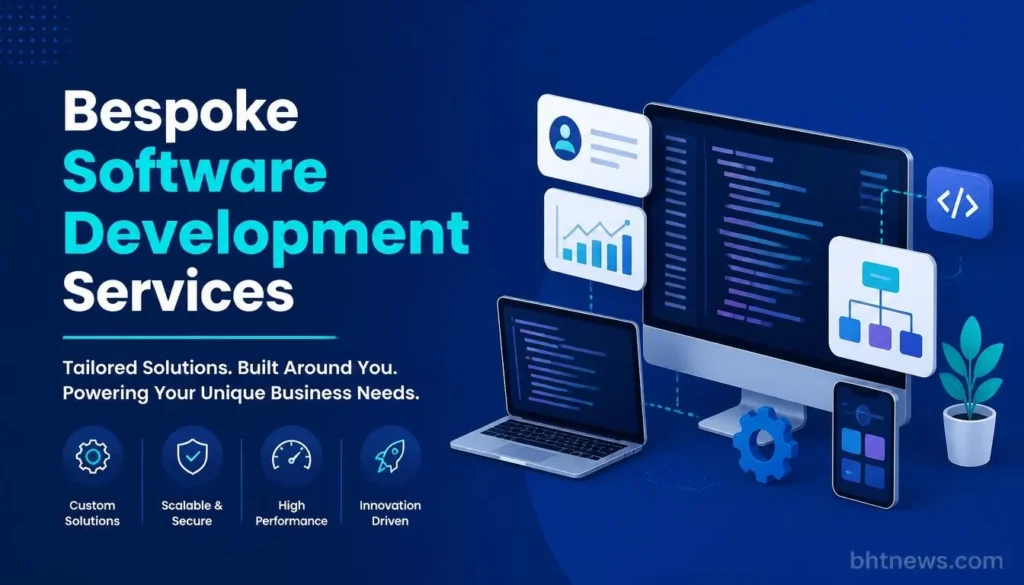
Bespoke software is software built just for one organization, not the general market. “Custom” is basically the same thing; “bespoke” is the UK’s preferred term. But don’t assume bespoke always means building something entirely from scratch.
Sometimes, it’s just linking existing systems together, creating a plugin, adding custom screens for your database, generating specific reports, or overhauling parts of an enterprise platform. For a lot of businesses, starting small like this makes the most sense.
A development company’s offerings usually cover these parts:
- Discovery and business analysis: Pinpointing the real problem, who’s going to use the system, and any constraints. Sometimes this ends up as a standalone roadmap that you’re free to take elsewhere.
- Design: Laying out workflows and user interfaces, ideally with input from the people who’ll actually use them.
- Development: Building the software, usually in iterations if requirements aren’t locked down.
- Integration: Connecting the new system to billing, inventory, CRM, or whatever else you’re using.
- Testing: Making sure everything works, including dealing with messy real-world issues like slow connections or missing data.
- Deployment: Rolling the new system out (sometimes in phases), and often running it alongside the old one for a bit.
- Maintenance: Ongoing fixes, security updates, new features, and hosting support.
- Technical audits: Reviewing existing systems you might have inherited.
Not every provider offers every stage. Make sure you know if discovery is bundled in or billed separately; it changes how quotes stack up.
Examples in the Real World
Custom software usually shows up where off-the-shelf tools can no longer keep up:
- Internal systems: Custom CRMs, ERPs, or admin dashboards that stop the spreadsheet chaos.
- Customer or partner portals: Let customers or partners check orders and approvals themselves, with less back-and-forth by email.
- Integrations: Keeping billing, inventory, and order systems in sync.
- Workflow and approval systems: Managing procurement, logistics, or finance approvals that cross teams.
- Reports and analytics tools tailored to your actual metrics (not generic dashboards).
- Mobile apps for field staff, especially when internet connections are shaky.
- Industry-specific tools: For example, a food distributor tracking inventory with expiry dates and supplier batches.
Small, focused projects work best. Rebuilding one approval workflow beats trying to create an all-singing, all-dancing platform that never finishes.
Bespoke or Off-the-Shelf: A Quick Test
Provider websites will tell you bespoke software fits better, while off-the-shelf products are cheaper upfront. Both have a point, but the real question is: how special are your needs?
Here’s a simple test:
- Can you get 80% of the result from a packaged product by tweaking a few habits? If yes, just buy.
- Does your process actually give your business an edge like a unique pricing engine or workflow? Now bespoke makes sense.
- Are you paying for too many tools, extra seats, or add-ons and still moving data around by hand? This friction is a strong case for going custom.
- Do you need compliance features like specific permissions, audit trails, or approval steps that aren’t supported by any product? You’ll need to build that.
- Are your requirements clear enough that a vendor can accurately quote you? If not, start with a paid discovery project.
| Factor | Bespoke tends to win when… | Off-the-shelf tends to win when… |
| Process fit | Your workflow is unusual or a competitive edge | Your workflow is common in your industry |
| Time | You can wait months and iterate | You need something working in weeks |
| Upfront cost | You’ll amortize a larger build over years | You need to keep the first outlay low |
| Control | You need to decide features, data, and integrations | A vendor’s roadmap is acceptable |
| Support burden | You can fund maintenance and a technical owner | You’d rather the vendor handle updates and hosting |
Common Pitfalls With Bespoke Software
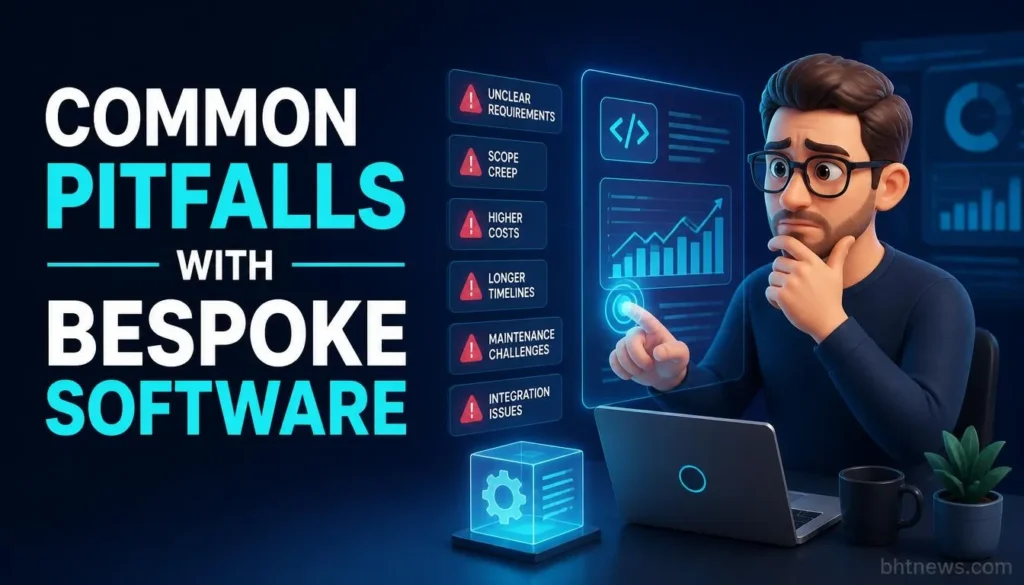
Most vendor websites gloss over the downsides.
Here’s what you need to know:
- Upfront costs and timelines are higher than subscribing to something. It’s a bigger commitment.
- Once you build custom software, the upkeep is all on you; think another 15% to 25% of the build cost each year, usually forever.
- Fuzzy requirements get expensive. Projects balloon in cost when the scope changes, and “agile” only helps if someone on your side makes decisions fast.
- You can get locked in to your provider, especially if they’re the only ones who really understand your code. Good documentation and keeping your own access help avoid this.
- Big, ambitious projects fail more than anyone likes to admit. A 2012 McKinsey and University of Oxford study of more than 5,400 IT projects found that large ones, with initial budgets above $15 million, ran 45% over budget on average and delivered 56% less value than predicted. Most business software builds are far smaller than that, but it is a reminder to start small and stay focused.
How Much Does Bespoke Software Cost?

There’s no one-size-fits-all price. But you’ll see ranges: Simple builds can start around $40,000, mid-size projects go up from there, and enterprise setups can hit several hundred thousand. These are vendor-published ranges, and no independent survey was used. Hourly rates matter too. US developers typically charge $125-250/hr, while offshore teams in Asia often advertise $30-50/hr. Be careful: sometimes “cheap” leads to rework that eats up any savings.
| Source (all vendors) | Small or MVP | Mid-size | Enterprise |
| Keyhole Software, 2026 guide (US consultancy, says it reviewed 200+ projects) | $40,000 to $120,000 | $120,000 to $300,000 | $300,000 to $1M+ |
| Riseup Labs, 2026 list (Bangladesh-based vendor) | $60,000 offshore to $100,000 US/UK/EU | $120,000 to $250,000 (custom web app) | $700,000 to $1.5M+ |
| Entrance Consulting (US consultancy) | Low end $30,000 to $40,000 | Not stated | Hundreds of thousands |
| easy.bi, April 2026 (German vendor, EUR) | EUR 50,000 to 150,000 | EUR 150,000 to 350,000 | EUR 400,000 to 1.2M |
Remember, the initial quote is rarely the full cost. Common extras:
- Discovery phase (sometimes $15,000 to $40,000+)
- Project management (10–15% beyond development)
- Integrations (often take longer than initial estimates)
- Data migration, training, and managing change with your team
- Ongoing hosting, third-party licenses, extra compliance work
- Annual maintenance (plan for 15–25% of build cost)
Here’s a quick example: Let’s say a company builds a $150,000 order-approval system. At 15–25% per year, maintenance runs $22,500–$37,500 annually. Over three years, that adds up to $67,500–$112,500 before you pay for hosting or new features. So always ask: “What does year two cost?”
UK buyers will see prices in pounds, and rates can vary depending on your region or the developer’s experience. Check whether UK quotes include VAT (the standard rate is 20%). Always get quotes in your currency, and make sure assumptions are spelled out clearly.
How You Pay Shapes the Project
Payment models come in three flavors:
- Fixed Price: One price for a clearly defined project. Solid for pilots, but any change means renegotiation.
- Time and Materials: Pay as you go for hours worked. Handles changing requirements better, but YOU need to watch the budget.
- Retainer: Set a monthly fee for ongoing work. This is common once your system is live.
If you’re not sure what you need, pay for a discovery phase at a fixed rate. Once you know the scope, move to time-and-materials or milestone pricing.
Who Actually Owns the Code?
This is often skipped and can cause major headaches. Paying for software doesn’t mean you automatically own it.
- In the UK, the developer usually owns the copyright unless the contract assigns it to you in writing, even if you’ve paid.
- In the US, “work for hire” isn’t as clear-cut as some think; software written by an independent contractor often does not qualify (see the Copyright Office guidance on works made for hire), so get a present-tense, written assignment of copyright in the contract. Don’t settle for promises to transfer later.
Protect yourself with a contract that clearly includes:
- A signed, present-tense assignment of IP for deliverables and clear payment terms.
- A detailed list of what you’ll get: source code, documentation, database schemas, tests, etc.
- A license to anything the developer reuses that predates your project.
- Code repository and cloud accounts in your company’s name right from the start.
- Any open-source tools/libraries disclosed up front.
- Handover support if you switch providers and code escrow if it makes sense.
Add data-protection clauses if your project handles personal data (UK GDPR and the Data Protection Act 2018 in the UK, HIPAA for US health data, or whatever applies to your sector).
Choosing a Software Development Company
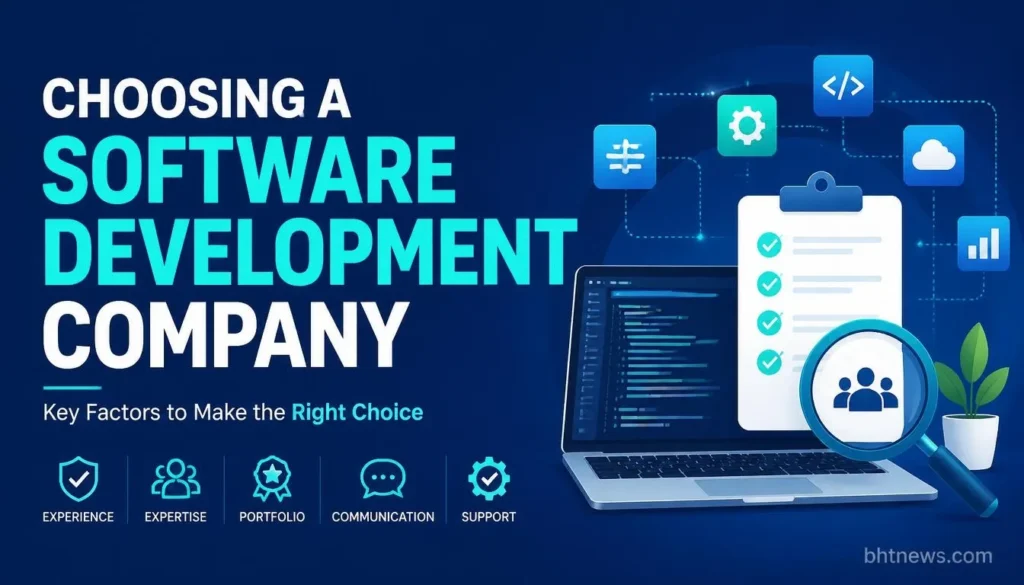
Internet searches bring up endless “top 10” lists, but many are self-published and rank their own firms highest. Trust, but verify.
Make Your Shortlist Using
- Peer recommendations
- Review platforms like Clutch or Gartner Peer Insights
- Industry communities
Focus on real project details: look for named reviewers, similar industries and project sizes, recent dates, and evidence that the vendor handled challenges well. Perfect ratings with no detail? Make a reference call before committing.
Ask Tougher Questions
- Can I talk to two clients who did similar projects with you?
- Who’s actually working on my project, and how long have they been with your team?
- How do you handle scope changes?
- What’s included and not included in your estimate in writing?
- Who owns the code, the repository, and the cloud accounts?
- What are your promises after launch: response times, support, handover?
- 7. How do you build security? Ask if they follow industry standards like NIST’s Secure Software Development Framework.
Major Red Flags:
- “Fixed” quotes with no discovery for vague ideas.
- No references or real case studies.
- Nobody on your team is named as the decision-maker.
- Vague answers on maintenance, IP, or data security.
- Any pressure to sign right away for a “discount.”
Should the Team Be Local, Nearshore or Offshore?
Local teams make in-person workshops and quick fixes easier; remote teams can be cheaper, but time zones and communication slow things down and sometimes lead to extra rework. Nearshore means a team in a nearby country or time zone. Decide what matters most for your project and check the actual overlap in working hours.
If You’re a Startup
Start small. Get value fast. Don’t give a vendor total control of your code before you’ve landed customers. Pay for a discovery phase, then pick a firm that’s right for you. This advice matters even more for startups than for big, established companies.
Final thoughts
Custom software is worth it when your process is unusual, or your patchwork tools are a headache. It’s a mistake if requirements aren’t clear, your budget is only for the launch, or you don’t clarify code ownership.
Before calling anyone, write up one page: your problem, your users, the three must-haves for version one, and what you’ll use to measure success. Then get each shortlisted provider to quote for a discovery phase. Their answers will tell you more than any ranking ever could.
This is general advice, not legal or financial advice. Always get a qualified pro to review contracts and IP terms before you sign.
Frequently Asked Questions
What’s the difference between bespoke and custom software?
None, really. “Bespoke” is popular in the UK, “custom” in the US; both mean software made just for you. Some vendors call “bespoke” a full custom build while “custom” means a heavily modified existing product. If you’re not sure how they’re using the word, ask.
How long does a bespoke project take?
Depends on complexity. For a basic project, plan on 2 to 4 months; mid-size, 4 to 8 months; larger enterprise software can run 8 to 18 months or more. These are all vendor estimates. Integrations and data migration almost always take longer than you expect.
Can I start small, instead of building a whole system right away?
Yes. It’s often the smart choice. Pay for a discovery phase, build just one workflow or integration to prove the value before scaling up. Remember, bespoke can be as small as an add-on or integration, not just huge apps. For a very small tool, an AI app builder may be enough to test the idea first; see our guide to free AI app builders.
How do I read reviews for bespoke software companies?
Look for details: named reviewers, similar project sizes and industries, recent completion dates, specific challenges and how they handled them. Ask for a reference call. Ratings alone mean little, and every review site has its own rules for verification, so read them.
Who maintains bespoke software after it goes live?
Whoever you contract with, and you should settle this before signing. Could be the original developer on a retainer, another vendor, or your own team after a handover. Budget roughly 15% to 25% of your original build cost per year for ongoing maintenance, according to the vendor guides reviewed for this article.
Does agile development work for bespoke projects?
Yes, especially if your requirements will change and you have someone to make quick decisions. Iterative delivery suits evolving projects, but fixed-scope approaches can be better if you know what you need up front (like in regulated sectors). Pick the method that fits your reality.

