





Customized software development services are paid engagements in which a firm designs, builds, modernizes, and supports software made for one organization.
Don’t hire just because someone’s ranked high; look for proof you can actually check. Ask for examples of similar projects, talk directly to the engineers who’ll do the work, and start with a paid discovery phase.
Also, get everything in writing: the agreement should clearly assign code ownership to you. Set aside about 15% to 20% of your build cost every year for ongoing maintenance.
This advice works for any buyer, from a three-person team commissioning internal tools to a bank overhauling its core systems.
That range is why search results for customized software development services are so unhelpful: a directory of dozens of vendors, a few thin service pages, and lists written by firms that rank themselves.
This guide is written for buyers. It breaks down what custom software services really are, who’s out there selling them, how to make sense of rankings, where AI actually fits in (and where it doesn’t), what needs to be in your contract, and how much projects actually cost. All costs are in US dollars.
If you are comparing bespoke and custom builds, see our guide to bespoke software development services.
Table of Contents
What Customized Software Development Services Are
Custom software development is software built for a specific organization’s needs instead of for a mass market. The services are the professional work of making it.
Gartner, the research firm, says custom software development services mean professional help for designing, building, or improving applications to fit unique business needs.
That covers everything from gathering requirements and writing the code from scratch, using a platform as a service, to piecing together apps from existing web services and reusable code.
Gartner also points out that services called product engineering or digital product development fall into the same bucket, and that these aren’t sold as off-the-shelf products.
There are two key things you should take from that.
- First, “custom” doesn’t mean inventing everything; building with reusable parts still counts.
- Second, these services help update or evolve existing software too, not just create something brand new.
So if your system is stuck in the past but still runs, this is the kind of project to consider.
Who Provides These Services (and How to Read the Rankings)
Providers fall into roughly four groups. The groupings are mine, based on how the sources describe delivery models; the boundaries blur.
- Global consultancies and system integrators: very large firms for multi-year programs with heavy governance. Gartner’s directory lists many of these. Expect formal processes and long engagements.
- Mid-size engineering firms: a few hundred to a few thousand engineers, often with delivery centers in several regions. Simform’s list is mostly this group.
- Boutique studios and nearshore or offshore teams: smaller, often specialized by stack or industry, with lower hourly rates and time-zone trade-offs.
- Marketplaces: networks such as Toptal connect you with individual specialists. You get speed and skills but manage coordination yourself, as Simform’s FAQ points out.
What the Gartner Magic Quadrant Tells You
Gartner publishes a Magic Quadrant for Custom Software Development Services. The 2025 edition was published on December 1, 2025, and evaluates 20 providers, according to vendor announcements. A newer edition may appear around the same time this year, so check for it. The announcements include Gartner’s regular disclaimer: Gartner doesn’t endorse vendors, their research is just analysts’ opinions, and they don’t tell buyers to only pick the highest-ranked providers.
That is good advice. The quadrant usually maps out how big firms stack up on vision and execution, so it’s most useful if you’re working at enterprise scale.
What Gartner Peer Insights and Clutch Reviews Can Tell You
Customized software development services reviews are a useful signal if you know how they’re collected.
Gartner’s published guidelines say reviewers must use a corporate email matching their employer, attest they have no conflict of interest and have a verifiable professional profile, and that vendors may not write reviews on customers’ behalf or coach them.
Incentives, such as gift cards, are allowed under the rules, and Gartner says it doesn’t judge whether a review is true. I did not check Clutch’s equivalent rules, so read them yourself.
So reviews are evidence of customer experience, not proof of quality. Read the detailed ones, look for projects like yours, and call a reference.
Why This Article Has No “Top 10 Companies” List
The top-10 and “company in USA” lists in this space tend to be written by the vendors themselves. Simform’s list, for example, ranks Simform third.
Its stated method is an AI-assisted market scan with manual verification of Clutch, G2, and Gartner reviews, which is a reasonable approach but not an independent test.
Without a method I can audit, a list of names would be a recommendation I can’t stand behind. The hiring steps below will get you to a better shortlist.
Customized Software Development Services Using AI

Nearly every provider now advertises AI, either as a service they build (AI features in your product) or as a way they build (AI-assisted coding). They are different things, and the second is where buyers need to be careful.
Start with the evidence. A randomized trial by the research group METR had 16 experienced open-source developers complete 246 tasks, each randomly assigned to allow or forbid AI tools.
According to an eWeek report from July 2025, tasks took 19 percent longer with AI, even though developers had expected a speedup. The authors note the result may not hold for other settings and don’t claim future models won’t speed developers up.
A larger survey points the other way on speed and warns on stability. The 2025 DORA report, summarized by Google Cloud, surveyed nearly 5,000 technology professionals. It found nearly 90 percent use AI, and a positive link between AI use and delivery throughput, but delivery instability kept rising.
Here’s how Gartner sums up AI: it makes good teams better and exposes the cracks in teams that aren’t working well.
What Does That Mean For You?
- First, don’t expect discounts just because a vendor uses AI tools; ask how their estimate changes and why.
- Always check how the vendor reviews, tests, and secures code; human review of AI-generated code and proper testing matter even more now.
- Ask what happens to your confidential data and code when AI enters the mix, and which tools they’re actually using. Get those details in the contract.
- Find out who stands behind any defects, and who handles open-source or licensing problems in AI-generated code.
- If you want AI features in your own product, treat that as a separate part of the project with its own acceptance tests; AI can behave differently than normal code.
What Your Contract Should Cover

A proper custom development deal usually has two pieces: a master agreement with the overall terms, and a statement of work (SOW) for each project listing the scope, deliverables, timeline, and cost.
Whether it’s called a services agreement or something else, make sure you read (and understand) the important sections. This isn’t legal advice; get a lawyer to review before you sign.
| Clause | What to look for |
| Scope and deliverables | Specific outputs, not just “the app”: source code, documentation, test suites, deployment scripts |
| Acceptance | Written criteria and a review period before final payment. One developer-oriented template I read had no acceptance procedure at all |
| Change control | How changes are requested, priced and approved. Watch vague triggers: that template treats any change needing 25 percent or more extra time as significant, billed at the developer’s rate |
| IP ownership | A signed assignment of rights in the deliverables. Beware ownership that passes only after full payment, with the developer keeping tools and libraries, and check what pre-existing code you’re licensed to use |
| Warranties | Professional-standard work, non-infringement, and a defined bug-fix period after launch. Be wary of “as is” language |
| Liability | A cap that applies to both sides, and carve-outs for confidentiality and data breaches |
| Security and data | Security practices, breach notice, data-protection terms (UK GDPR for UK data, applicable US state and sector rules) |
| Subcontractors and AI tools | Disclosure of who works on your code, where, and with which tools |
| Termination and handover | Notice period, what you receive if the relationship ends, access to repositories and cloud accounts, and any code escrow |
| Support | Response times, hours, and price after the warranty period |
On ownership specifically, both US and UK practice require care. In the UK, a developer is generally the first owner of the code they write unless there’s a written assignment, according to law-firm guidance from November 2026.
In the US, a 2008 Jones Day article explains that “work made for hire” language rarely covers commissioned business software and recommends a present-tense assignment instead. Simform’s FAQ gives the practical rule from the vendor side: if a vendor resists IP clauses, that’s a red flag.
The template I mentioned is a web-design contract from a free-template site and is clearly written for developers. I’m using it as a worked example of what favors one side, not as a model agreement.
Cost and Timelines
Pricing is all about the project’s scope, where the team’s based, and how experienced they are. Simform, one vendor, gives these ballpark figures: simple MVPs come in at $25,000 to $50,000 and take 2 to 3 months; mid-level apps cost $75,000 to $250,000 over 4 to 8 months.
Sophisticated platforms might take 6 to 12 months; big enterprise systems can stretch to 12 to 24 months or more.
Hourly, they quote $25-$49 an hour for Latin America and Eastern Europe, and $100-$200 an hour if you’re hiring US-based pros.
Another vendor, Keyhole Software, puts a basic build at $40,000-$120,000, and mid-sized at $120,000-$300,000.
These huge ranges show just how differently “simple” can be defined. Treat every estimate as a jumping-off point; your actual scope determines your actual price.
Some budget rules come up over and over: plan to spend about 15%-20% of your build cost per year on maintenance (Simform and Keyhole both say this, with Keyhole allowing for 25%). Simform also advises starting with 12-24 months’ worth of maintenance plus a 20% buffer for scope changes in your first budget.
For example, a $120,000 build would mean $24,000 set aside for changes (20%), and $18,000–$24,000 a year for maintenance.
Cheap hourly rates don’t automatically lower your final bill. Simform warns that efficiency and quality matter much more. A cheap rate might just mean paying twice to get something fixed.
Here’s How Hiring Typically Works
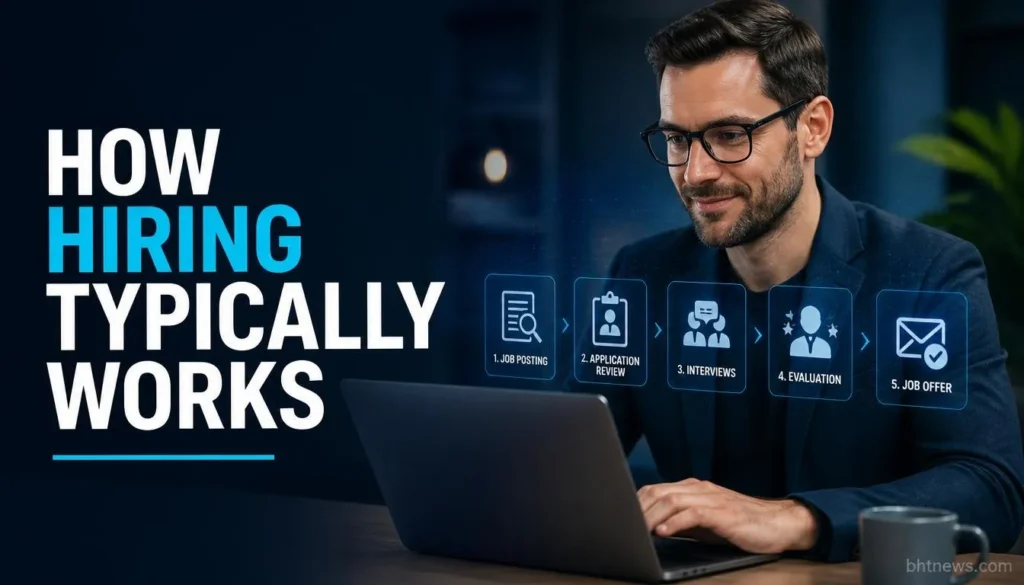
- Write a one-page brief. Explain the problem, the users, must-have features, integrations, and compliance needs.
- Set a budget that covers maintenance and a buffer for changes.
- Shortlist three firms based on their industry fit, similar past work, and reviews you’ve actually gone through.
- Ask each to send a proposal showing who’s on the team, their technical plan, key milestones, and a detailed cost breakdown.
- Interview the actual engineers who’ll be doing the work, not just the sales lead.
- Pay for a short discovery phase or pilot (two to four weeks) before agreeing to the full build.
- Run the contract by your lawyer and cross-check it against the important clauses above.
Mistakes the sources warn about, and that match common sense: choosing on price alone, skipping a technical evaluation, ignoring communication fit and time-zone overlap, and leaving post-launch support unplanned. For another view of build partners, see our guide to app development companies.
Conclusion
Buying custom software development isn’t as mysterious as it looks. The things that matter are easy to check: look for a track record of similar work, talk to the team, pay for a discovery phase, and close the loop with a contract that gives you ownership of the code.
Rankings and directories are just a first filter. When it comes to AI, what actually changes is the set of questions you need to ask around security, accountability, and code review, not the fact that you need to ask them at all.
So, what’s next? Start with a one-page brief, pick three firms, and ask them all the same questions about AI, code ownership, and support. Comparing answers will teach you way more than any list on the internet. You’ll find more guides on software and business technology at BHTNews.
This article is for general information only; don’t treat it as legal or financial advice. Always have a professional look over any agreement before you sign.
Frequently Asked Questions (FAQ)

Should I hire local or offshore?
It depends on what matters most to you. Local or nearshore teams make it easier to coordinate in the same time zone and easier to meet face to face. Offshore teams usually cost less and let you pick from a wider pool of talent. A lot of companies use a mix. Whatever you choose, test how well you communicate with the team right away, and make sure your agreement spells out IP ownership.
What’s the difference between a development company and a marketplace?
A development company gives you a managed team with project management, quality assurance, and clear responsibility for delivery. A marketplace (like Toptal) introduces you to freelancers or specialists. That can fill a skill gap quickly, but you’ll need to coordinate and manage the project yourself. Marketplaces fit short or targeted needs; companies are better for longer or more complex projects.
Do I need a CTO to hire a software development firm?
Not necessarily, but you do need someone technical to review proposals and check progress. If you don’t have in-house leadership, look for firms that offer product management or bring in a technical adviser to help you choose and review the work.
Fixed price or time and materials?
Fixed price makes sense if you know exactly what you want and don’t expect much to change; modifications can get expensive fast. Time and materials is better if requirements are evolving, but it needs closer oversight. Many buyers pay a fixed price for discovery, then switch to time and materials. Simform says this is common.
What happens after delivery?
Support terms vary. Some vendors offer a free support window for bug fixes; others charge a retainer. Agree on all this ahead of time, including response times, security patches, and hosting. Budget around 15%-20% of the build cost per year to keep things running smoothly.
If a provider is a Gartner Magic Quadrant leader, are they automatically the right pick?
No. Even Gartner says not to just chase the highest rank. The quadrant usually tracks big firms and might not suit small projects. So, always check the team, fit, and references for your specific needs.
How much do customized software development services cost?
It varies widely. One vendor’s guide puts simple builds at $25,000 to $50,000 and mid-level apps at $75,000 to $250,000, while another puts basic builds at $40,000 to $120,000. Treat these as starting points, and budget about 15% to 20% of the build cost each year for maintenance.
How long does a custom software project take?
One vendor’s guide estimates 2 to 3 months for a simple MVP, 4 to 8 months for a mid-level app, 6 to 12 months for a sophisticated platform, and 12 to 24 months or more for a large enterprise system. These are vendor estimates, so ask each provider for a timeline in writing.