







If you want the quick rundown: Gusto and OnPay are the best picks for anyone mainly struggling with payroll. Zoho People is your go-to if your team’s tiny or you’re watching every dollar—it’s cheap, but still doesn’t feel flimsy.
BambooHR and Rippling work well for growing teams that need a fuller HR setup (think hiring, onboarding, feedback, reports).
If you want group health benefits but don’t want to negotiate them yourself, check out Justworks.
In the rest of this guide, you’ll see real 2026 pricing, a look at where each platform actually shines, and some tips to help you match the right tool to your team size.
Table of Contents
What to Look For in an HR System For a Small Business
Before you get lost in product comparisons, let’s get honest about which features you actually need at a small-business scale.
Here’s what matters, and what’s really just “enterprise bloat” that you’ll never touch:
- Payroll accuracy and tax filing: You can’t mess around here. Your payroll tool needs to file all federal, state, and local taxes automatically. Trying to do taxes by hand is how small businesses get fined and frustrated.
- Employee self-service: Employees should be able to update their info, grab pay stubs, or request PTO without pinging you every time. This saves everyone headaches.
- Time and attendance tools: If you have hourly workers, you need clock-in/clock-out, overtime calculations, and PTO tracking built in—not awkwardly tacked on.
- Onboarding flows: Automate things like W-4s, I-9s, and direct deposit forms. That first week for a new hire runs smoother, and you win back admin time.
- Room to grow: a tool that works at 5 employees but requires a full platform migration at 30 employees creates avoidable disruption later.
- Another non-negotiable thing: transparent pricing. Per-employee, per-month numbers are easy to budget. “Get a quote” platforms leave you guessing about costs until you’re negotiating.
The Best HR Systems For Small Businesses in 2026
1. Gusto — Best For Payroll-First Small Businesses
Gusto remains the most commonly recommended small business HR management system when payroll is the primary need.
Gusto rolls full-service payroll, tax filing, benefits administration, and a very straightforward employee portal into one dashboard.
Pricing: Simple plan is about $49/month plus $6 per employee. Plus plan jumps to $80/month plus $12 per employee (adds multi-state payroll and time tracking). Premium is about $180/month plus $22 per employee and includes a dedicated HR advisor. There’s a dedicated Contractor Only plan for 1099-heavy businesses.
Best for: businesses under about 50 employees where payroll and benefits are the main headache and deep HRIS features (performance reviews, org charts) are a nice-to-have, not a requirement.
2. OnPay — Most Transparent Pricing
OnPay covers essentially the same payroll ground as Gusto — unlimited pay runs, multi-state tax filing, contractor and employee payments in one dashboard — with a simpler, single core plan instead of multiple tiers.
Pricing: $49/month base plus $6 per worker (employee or contractor) on the core Payroll Essentials plan. An optional HR add-on costs $15/month plus $2 per worker for PTO workflows, and expanded onboarding; Compliance Resources and Live HR Support are separate add-ons.
Best for: small businesses that want predictable, published pricing without a multi-tier decision, and don’t need Gusto’s more built-out benefits marketplace.
3. Zoho People — Best Affordable, Self-Service-Focused Option
If your priority is a genuinely affordable cloud-based HR software for small business use — especially one with a strong self-service HR portal — Zoho People is the standout budget pick. Zoho People is free if you have up to five employees and doesn’t cost much as you scale.
Pricing: Essential HR at $1.50 per employee/month, Professional at $2, Premium at $3, and Enterprise at 4.50. A“PeoplePlus” bundle(4.50–10/employee/month) brings in payroll, recruiting, and expenses if you need more tools from Zoho’s suite.
Best for: startups and very small teams on a tight budget, or businesses already using other Zoho products who want one connected ecosystem.
4. BambooHR — Best For HR-Led Growing Teams
BambooHR gets recommended as soon as you have an HR person—even if they’re solo—because it covers performance management, employee feedback, and more detailed reporting than basic payroll-focused tools.
Pricing: BambooHR doesn’t list prices publicly. Expect custom quotes, but according to recent buyer data, it runs $6 to $25/employee/month for Core, Pro, and Elite plans. Payroll and applicant tracking cost extra. Treat any online number as a ballpark, and get your own quote before locking things in.
Best for: businesses (often 20+ people) that have outgrown a payroll-only setup and want a real HR platform—and are fine going through a sales call to get pricing.
5. Rippling — Best For Teams Scaling Toward Mid-Market
Rippling is built as a modular workforce platform — HR, payroll, benefits, IT device management, and spend management all sit on one employee record.
That makes it a strong fit for small businesses that expect to need mid-market-style HR systems soon, since you add modules rather than switching platforms entirely.
Pricing: Rippling advertises a starting point of roughly $8/employee/month for its core platform plus a flat base fee commonly cited around 35–40/month, with each additional module (payroll, benefits, IT) adding its own per-employee charge, typically 4–12 more per employee. Like BambooHR, Rippling doesn’t publish a full combined rate card — get an itemized quote for the specific modules you need.
Best for: small businesses already planning for growth, remote or hybrid teams that also need IT device management, and anyone evaluating hr systems for medium-sized businesses as a next step rather than a distant hypothetical.
6. Justworks — Best For Small Business Health Benefits (PEO)
Justworks works differently from the other platforms here: its PEO plans put Justworks in a co-employment relationship with your business, which is what lets a 10-person company access group health, dental, and vision plans comparable to what a much larger employer could negotiate independently.
Pricing: Justworks offers a standalone payroll plan for around $50/month plus $8 per employee if you just need payroll. PEO Basic is typically $59–79/employee/month, and PEO Plus (with the full benefits bundle) is usually $99–109/employee/month. These numbers change a bit depending on your benefits, so it’s best to check for the latest rates.
Best for: small businesses that want to offer competitive health benefits without an in-house benefits negotiation process, and are comfortable with the co-employment model a PEO requires.
Quick Comparison Table
| Platform | Starting Price | Pricing Transparency | Best For |
| Gusto | ~$49/mo + $6/employee | Published, tiered | Payroll-first small businesses |
| OnPay | ~$49/mo + $6/worker | Published, single core plan | Simple, predictable payroll |
| Zoho People | Free (≤ 5 employees), then ~$1.50/employee/mo | Published, per-employee | Budget-focused startups, self-service |
| BambooHR | Custom quote (~6–25/employee/mo est.) | Quote-only | HR-led teams wanting a full HRIS |
| Rippling | ~$8/employee/mo + base fee, modular | Partially published, quote for modules | Teams scaling toward mid-market |
| Justworks | ~$50/mo + $8/employee (payroll); $59+/employee/mo (PEO) | Published ranges | Small businesses wanting bundled benefits |
Pricing above reflects publicly reported figures as of 2026 and can change — always confirm current rates directly with the vendor before budgeting or signing a contract.
Cloud-Based HR Software vs. Spreadsheets: Why It Matters for Small Teams
Every platform in this comparison is cloud-based, and that’s worth explaining rather than assuming. Switching to a cloud-based HR system means your records, payroll, and PTO requests live online.
No more everything-on-one-laptop anxiety—employees can handle their own info, you’re not at risk if someone’s computer dies, and tax filings just happen. You don’t have to hope someone remembers those pesky deadlines.
The tradeoff is a recurring subscription cost instead of a one-time spreadsheet template — for most businesses past 3–5 employees, the time saved outweighs that cost fairly quickly.
Do You Need a System Built for Medium-Sized Businesses Instead?
Some of these tools (like Rippling and BambooHR) work for companies way beyond the “small business” label, so the line isn’t hard and fast. Still, a few signs say you need to look at mid-sized business HR platforms:
- You hire across multiple states or countries and need top-tier compliance.
- Your HR team needs role-based permissions and not just a single admin.
- You want advanced features like performance reviews, compensation planning, or workforce analytics—which usually come in bigger packages.
If that’s not you yet, starting small with something like Rippling or BambooHR (both scale up nicely) means you won’t have to switch platforms entirely later.
HR and Payroll Software: One Platform or Two?
A common decision point is whether to buy a combined hr and payroll software for small business use, or keep payroll and HR as separate tools.
If you use a combined platform (like Gusto, OnPay, Rippling, or BambooHR with payroll), you avoid double data entry—new hires flow straight to payroll.
But if you love your current payroll provider and only need lightweight HR stuff (like PTO tracking), it can be cheaper to layer something like Zoho People on top instead of moving everything to an all-in-one system.
What Small Business HR Software Actually Costs
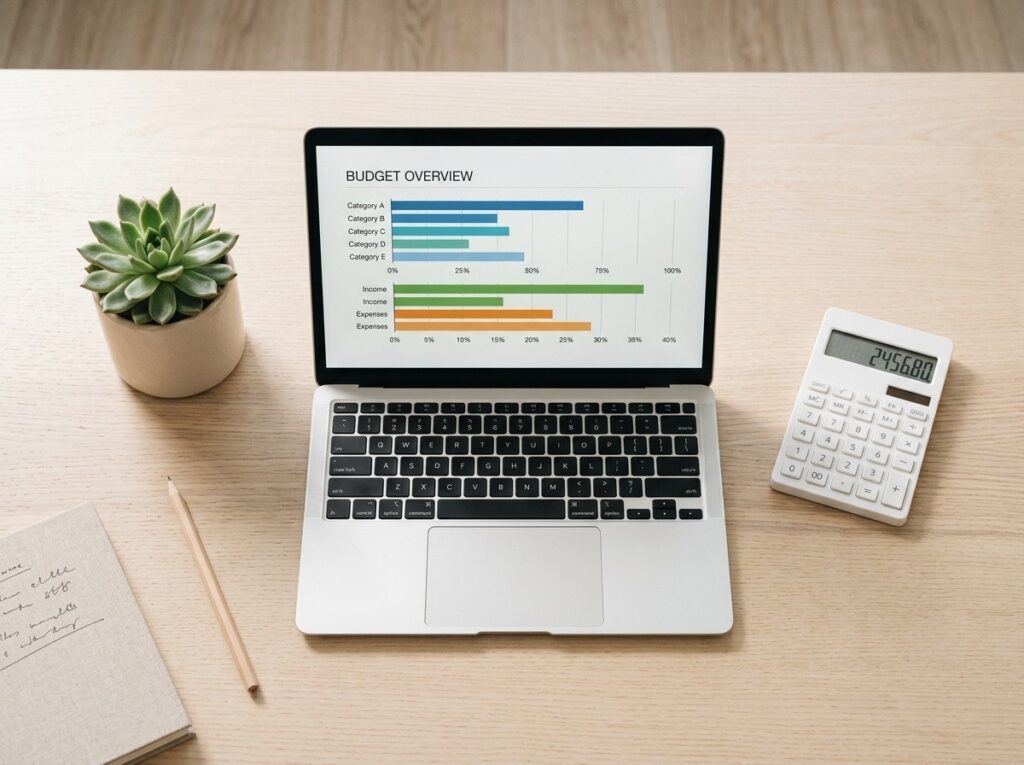
Realistic monthly costs vary widely by team size and platform choice. As a rough guide based on the pricing above:
- A 5-person team on a budget platform like Zoho People: roughly 0–25/month.
- A 5-person team on Gusto’s Simple plan or OnPay’s core plan: roughly 79–85/month.
- A 20-person team on Gusto Plus, OnPay with HR add-on, or Rippling’s core platform: roughly 300–400/month.
- A 20-person team on a Justworks PEO plan with full benefits: often 1,200–2,200/month, since PEO pricing bundles in benefits access, not just software.
The PEO jump looks large next to a pure software subscription, but it’s not a fair apples-to-apples comparison — PEO pricing includes access to group health benefits your company would otherwise have to source and negotiate separately.
Conclusion
There’s no single best HR system for every small business — the right pick depends on whether payroll, budget, growth plans, or benefits access is your biggest constraint right now.
Gusto and OnPay solve payroll cleanly, Zoho People solves budget and self-service, BambooHR and Rippling solve growth, and Justworks solves benefits access.
The fastest way to know which one fits is to try it against your actual team: pick the platform above that matches your biggest pain point and start its free trial or demo this week — most of these platforms let you set up a real payroll run or import your employee list in under an hour, which tells you more than any comparison article can.
Frequently Asked Questions
What is the best HR system for a very small business (under 10 employees)?
If you’ve got fewer than 10 people on your team, Zoho People is about as good as it gets price-wise—it’s free for up to 5 folks and still packs plenty of HR features. But if payroll and tax filings are what keep you up at night, Gusto or OnPay take the lead. Really, it comes down to what’s more of a hassle for you: handling payroll or general HR tracking.
Do small businesses need a separate payroll and HR system?
No — most small businesses are better served by a combined platform like Gusto, OnPay, or Rippling, which keeps employee data and payroll in sync automatically. Separate systems can make sense if you already have a payroll provider you’re satisfied with and only need to add HR features on top.
Is BambooHR or Rippling pricing negotiable?
About BambooHR and Rippling—neither one puts their prices online, so it all comes down to a custom quote. People say you can usually negotiate for a better deal, especially when you’re renewing a contract. Don’t just accept the first number they throw at you. Ask for a detailed quote and straight-up inquire about discounts. It pays off to push back a little.
What’s the difference between an HRIS and a PEO?
An HRIS (like BambooHR, Zoho People, or Rippling’s core platform) is software your business uses while remaining the sole employer of record. A PEO (like Justworks) enters a co-employment relationship with your company, which is what allows it to pool your employees into large-group health and benefits plans — a meaningfully different legal and pricing structure, not just a feature difference.
Can these platforms handle time and attendance tracking for hourly employees?
Yes, though depth varies. Gusto’s Plus plan and above include time tracking, OnPay integrates with time-tracking add-ons, and Rippling and BambooHR both offer attendance modules, usually as an add-on rather than included in the base tier. If hourly time tracking is a core requirement, confirm it’s included in the specific plan tier you’re pricing out, not just “available somewhere in the product.”