















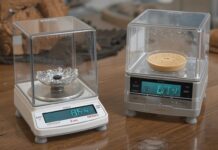

If you’ve set foot in a lab—or even just watched a science show—you might have heard someone mention a “micro balance.” But what does that actually mean? And why do people treat these things like gold?
A micro balance is a serious bit of kit. Think of it as the superhero of weighing devices—it can measure masses so tiny that a speck of dust feels heavy by comparison. We’re talking accuracy down to a single microgram (that’s 0.000001 grams). In the right setting, these balances aren’t just helpful—they’re essential. When you need to know the exact amount of a substance and even the tiniest mistake can ruin your whole project, a micro balance steps up.
Let’s walk through the basics—how these little machines work, why labs need them, and what to look for if you’re thinking of buying one.
Table of Contents
What Is a Micro Balance?
At its core, a micro balance is a lab scale built to measure absurdly small weights—down to a millionth of a gram. A regular scale isn’t going to cut it here.
What makes them special?
- They’re insanely precise—tiny differences matter.
- They sit on steady, anti-vibration surfaces.
- You usually find them inside enclosed chambers that block out air drafts.
- They use digital systems that make sure measurements stay spot-on.
Honestly, if you think of a kitchen scale as a tape measure, a micro balance is more like a microscope for mass.
How Does a Micro Balance Work?
Reading the ins and outs of a micro balance’s technology gets complicated fast, but here’s the gist: You put your sample on the balance’s pan. The balance senses the downward force—its weight. Then it generates an equal electromagnetic force to balance things out. The system figures out the mass based on how much force was needed.
This method means you can measure the tiniest powder sample and still get results you trust.
Where Do People Use Micro Balances?
Most guides just skim the surface, but there’s a reason so many industries depend on these:
1. Pharmaceuticals
- Measuring tiny amounts of active ingredients—nothing wrecks medicine faster than getting the dosage wrong.
- Making sure pills have exactly what they’re supposed to.
2. Chemical Labs
- Prepping ultra-precise solutions.
- Running experiments where even small measuring mistakes aren’t an option.
3. Research & Development
- Material testing.
- Nanotechnology, where “small” doesn’t even begin to cover it.
4. Environmental Testing
- Measuring pollutants floating in the air—think microscopic particles.
- Checking what’s in water or soil down to the tiniest trace.
5. Jewelry & Precious Metals
- Weighing diamonds or fragments of rare metals so buyers and sellers know they’re getting a fair deal.
Micro Balance vs Analytical Balance
These two are easy to mix up, but they aren’t the same:
- Micro balances measure down to micrograms. Analytical balances usually stop at milligrams.
- Micro balances are for the highest-precision jobs. Analytical balances are great for everyday lab work.
- Micro balances are just way more sensitive.
The rule’s pretty simple: if you’re dealing with extremely small samples and accuracy has to be dead-on, you want a micro balance.
Common Mistakes People Make
If you’re new to this, a few things trip people up every time:
1. Ignoring Air Currents
Even someone walking by or the AC kicking in can ruin a reading.
2. Skipping Calibration
Take a few seconds to calibrate before every session.
3. Touching Samples Directly
Fingerprints, body heat, and oils will mess with your results.
4. Placing on Wobbly Tables
If the table shakes, your numbers will too.
How to Choose the Right Micro Balance
So, you’re thinking of getting one. Here’s what actually matters:
1. Readability
You want precision down to 1 microgram, minimum.
2. Build Quality
Look for solid build, anti-vibration features, and a draft shield (usually a glass enclosure).
3. Calibration
Internal calibration is best—it saves you trouble and keeps things accurate.
4. Brand Reputation
Go with companies trusted by real labs. They last longer and just work better.
5. Budget
Micro balances aren’t cheap. And the very cheapest ones? You get what you pay for. Go for reliability over saving a quick buck.
Quick Practical Tip
From working with these myself, here’s the biggest thing: the room you’re in is as important as the balance. Even a top-of-the-line model won’t help if the environment isn’t steady. Make sure you have a stable, vibration-free table. Keep fans or AC away. Clean, quiet, and consistent is the way to go.
Pros and Cons
Pros:
- You get absolutely accurate measurements that regular scales can’t touch.
- Scientists, labs, and anyone who needs microscopic precision rely on them.
- They’re reliable if you treat them right.
Cons:
- Pricey.
- They need a controlled environment.
- Handle with care—you don’t want to drop one or use it around errors.
Conclusion
Micro balances aren’t your average weighing scales—these are precision instruments that make science, medicine, and high-stakes industries possible. When accuracy down to a single microgram matters, having a good micro balance (and using it wisely) isn’t just nice—it’s critical.
Explore quality models, compare capabilities, and find your next precision weighing instrument here:
👉 Micro Balance products – https://www.dscbalances.com/collections/micro-balances
This collection features a variety of micro balances suited for rigorous applications in research, quality control, and advanced testing environments.
Keep reading informative content at BHTNews
What’s the smallest weight a micro balance can measure?
Most top-end models handle as little as 1 microgram (µg).
Is a micro balance better than an analytical balance?
Depends what you need—micro balances are for ultra-high precision; analytical balances are more practical for everyday work.
Why does my micro balance give unstable readings?
Usually, it’s your environment. Watch out for airflow, surface vibrations, or changes in temperature. Get those sorted, and your balance will handle the rest.