











Small business owners ask me this all the time: “How come my competitor pops up on Google Maps, but I don’t?”
It’s enough to make you want to throw your phone; you’ve poured your heart into the business, but they just seem to materialize out of thin air.
Here’s the deal: they’re spending money on local SEO services, and you probably aren’t. But that’s about to change.
This guide gets straight to the point. You’ll see what local SEO actually covers in 2026, why it matters even more now, how to pick the right agency, and a practical checklist you can start using right away.
No nonsense. No tech-babble. Just real advice you can use.
Table of Contents
What Local SEO Services for Small Businesses Actually Cover in 2026
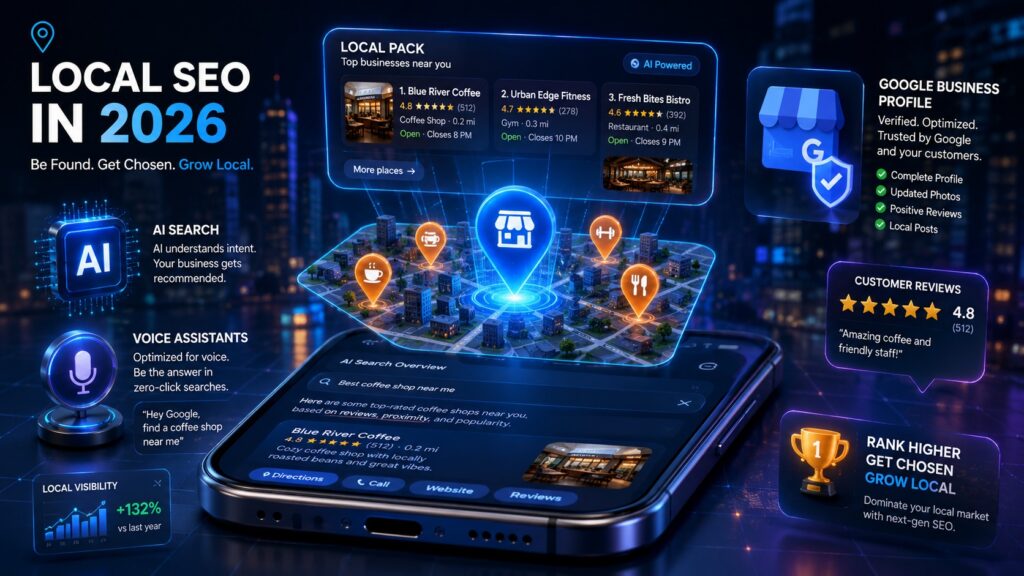
Local SEO isn’t just one thing; it’s a bunch of tactics working together to make your business visible to people close by.
Here’s what good local SEO services for small businesses should handle:
1. Google Business Profile (GBP) Optimization
Consider your Google Business Profile your digital storefront. In 2026, actions like calls, directions, and website clicks from GBP have shot up 41%. If your profile isn’t complete, you’re missing out on a ton of traffic.
2. Local Citation Building & NAP Consistency
A citation is simply your business name, address, and phone (NAP) showing up online — places like Yelp, Apple Maps, Bing Places, and so on. Google double-checks these to make sure you’re legit.
The catch: inconsistent info across sites can tank your rankings. “42 Main St” on Google, “42 Main Street” on Yelp? That confuses search engines, and trust goes down the drain.
3. Local Keyword Research & On-Page SEO
Most small businesses chase broad terms like “plumber,” but actually, you want stuff like “emergency plumber in [city]” or “affordable plumber near [neighborhood].” Local SEO pros dig up ultra-specific keywords and work them naturally into your website.
4. Review Management
Reviews aren’t just window dressing; they affect your search ranking. In 2026, 87% of people check reviews before choosing where to spend money. Businesses with 50+ Google reviews get 266% more leads than those with fewer than ten.
A solid SEO service sets up a system to ask for reviews, replies to every one (good or bad), and removes fake or unfair ones.
5. Local Link Building
Links from local websites, news outlets, blogs, and business groups let Google know you’re part of the community. It’s tough, but it really pays off.
6. Mobile Optimization & Page Speed
57% of local searches happen on phones. If your site’s slow or clunky, people bounce before you get a chance. Local SEO includes a technical check to make sure your site loads fast, looks sharp on mobile, and nails Google’s Core Web Vitals.
7. Schema Markup & Structured Data
Adding LocalBusiness schema markup to your site tells Google exactly who you are, where you are, and what you do. It’s a small technical step with a big effect on how you show up in search results.
Why Local SEO Really Matters for Small Businesses, Not Just Regular SEO
Lots of folks think local SEO is the same as standard SEO. Not even close.
National SEO is about going after broad keywords like “best coffee maker”. You’re up against every brand online, including Amazon.
Local SEO is about owning search in your area. Forget fighting with global giants; you’re racing against a handful of other businesses nearby.
Local searches convert way better. Check this out:
- 76% of people who search for something nearby visit a business in 24 hours
- 78% of local mobile searches end in an offline purchase
- 46% of all Google searches are local — 1.6 billion a day
- 88% of smartphone users who do a local search visit or call a store within the day
These stats aren’t just impressive; they prove local SEO brings real customers, fast. If someone searches “electrician near me,” they’re not browsing. They need an electrician right now.
For service-area businesses, plumbers, dentists, salons, law firms, and restaurants, local SEO isn’t optional. It decides if your phone rings or stays dead.
What Good Local SEO Services for Small Businesses Actually Get You
Here’s what working with good local SEO services for small businesses means for you:
- More Calls and Foot Traffic: If you rank in the Map Pack (the top three spots in Google Maps), you grab 44% of clicks for that search. Map Pack businesses see nearly double the action calls, direction requests, and site visits compared to those further down the list.
- Better Leads: People searching locally are ready to buy right now. That’s way more valuable than someone seeing a random social media ad.
- Trust and Credibility: Customers trust businesses with a complete, verified Google profile; they’re nearly three times more likely to choose you. Loads of five-star reviews are gold for your reputation.
- Higher ROI Than Old-School Ads: Unlike billboards or newspaper ads, local SEO targets people actively searching for what you sell. You’re not bothering anyone — you’re just there when they need you.
- Lasting Results: Paid ads stop when you stop paying. Good SEO keeps working month after month, even if you slow down your spending.
How to Pick the Right Local SEO Agency
A lot of business owners get burned here. Plenty of agencies promise page-one rankings in 30 days for $99, then vanish after cashing your check. So, here’s how to spot the good ones.
Questions to Ask:
- Have you worked with businesses like mine in my area?
- Can you show me real results or testimonials?
- What will your reports look like, and what do you measure?
- Will I own everything (content, citations, GBP changes) if I leave?
- How do you build local links without spam?
- How do you handle Google updates?
Warning Signs:
- Promises to make you “#1 on Google”.
- Won’t explain their process
- Price is oddly low (like less than $200/month)
- Uses shady tactics like fake reviews or keyword stuffing
- Locks you in with long contracts and no way out
- Applies the same generic process for everyone
What Good Agencies Actually Do
Top agencies start with a deep audit of your website, Google profile, citations, reviews, and competitors. They create a strategy with clear priorities and goals, and check in every month in plain English.
They don’t just chase rankings. They focus on what actually matters: more calls, more bookings, and more customers coming through the door.
2026 Checklist–Local SEO Services for Small Businesses
Whether you’re hiring an agency or tackling it yourself, here’s a simple checklist to make sure you’re covering all your bases:
| ✓ | Task | Priority |
| ☐ | Claim and verify your Google Business Profile | Critical |
| ☐ | Complete every section of your GBP (hours, photos, description, categories) | Critical |
| ☐ | Post at least once a week to your GBP | High |
| ☐ | Set up a system to request reviews from happy customers | Critical |
| ☐ | Respond to every Google review — positive and negative | High |
| ☐ | Audit your NAP across all major directories (Yelp, Apple Maps, Bing Places) | Critical |
| ☐ | Fix any inconsistent name, address, or phone number listings | Critical |
| ☐ | Build citations on niche-relevant and local directories | High |
| ☐ | Add LocalBusiness schema markup to your website | High |
| ☐ | Optimise your title tags and meta descriptions with local keywords | Critical |
| ☐ | Create dedicated location and service pages on your website | High |
| ☐ | Ensure your site loads in under 3 seconds on mobile | Critical |
| ☐ | Pass Google’s Core Web Vitals (LCP, CLS, INP) | High |
| ☐ | Set up Google Search Console and submit your sitemap | High |
| ☐ | Build at least 3–5 local backlinks per month | Medium |
| ☐ | Produce local-focused blog content once or twice a month | Medium |
| ☐ | Track your Map Pack ranking weekly for key local terms | High |
| ☐ | Monitor and respond to reviews on Apple Maps and Bing | Medium |
Common Mistakes Small Businesses Make With Local SEO
Even with good intentions, small businesses keep falling into the same local SEO traps. Here are the big ones:
- Inconsistent NAP Information: Your business name, address, and phone number need to match everywhere online. Dropping ‘Street’ for ‘St,’ forgetting to add ‘Ltd,’ or using a different phone number somewhere else, even little slips like these, mess with Google’s systems and can hurt your rankings.
- Ignoring Reviews: Not asking customers for reviews? That’s a lost chance to boost your reputation. And when you leave negative reviews unanswered, you look like you don’t care. You don’t have to argue or get defensive about bad feedback, just respond calmly and show people you’re paying attention.
- Neglecting Mobile Optimization: These days, most local searches happen on smartphones. If your website doesn’t work smoothly on mobile, people bounce and check out your competitors instead. Simple as that.
- Choosing Cheap SEO Providers: That $49-a-month local SEO deal probably isn’t helping, and could actually tank your rankings if they start tossing spammy backlinks at your site. Real local SEO takes effort and know-how. Shortcuts just don’t cut it.
- Ignoring Your Google Business Profile After Setup: Setting up your profile isn’t a set-and-forget thing. You need to post updates, add fresh photos, gather new reviews, and double-check that your info is right. Google notices when your business looks active, and rewards you for it.
- No Local Content Strategy: Google wants to see you’re part of the community. So talk about local happenings, write up case studies from your area, or share advice for your neighborhood. Local content gives you credibility that generic blog posts just can’t match.
- Skipping AI Overview Optimization: In 2026, Google’s AI Overviews appear in nearly half of local searches. Businesses with clear, structured content and complete profiles show up in these AI-generated snippets way more often. Using schema markup and keeping your GBP up to date makes a huge difference.
Bottom Line: Local SEO Is How Small Businesses Win Online in 2026
If you’ve read this far, you officially know more about local SEO than most of your competition. That alone is an advantage.
- The businesses you see at the top of Google Maps aren’t there by luck. They’ve claimed their profiles, kept their info up to date, ensured their directory listings match across platforms, collected reviews, and responded thoughtfully.
- Their websites are quick, look great on phones, and answer the local questions people are searching for.
- None of this is impossible, but it does take steady work and a plan. Whether you bring in an agency or handle it yourself, the checklist here gives you everything you need to get started and outrun your competitors.
- Local SEO works. The data says so. The real question is, when are you going to take it seriously, before or after your competition does?